
Local News
Pioneer Crossing Flex Lane construction update, winter weather does not hinder project

Ryann Anderegg | Lehi Free Press
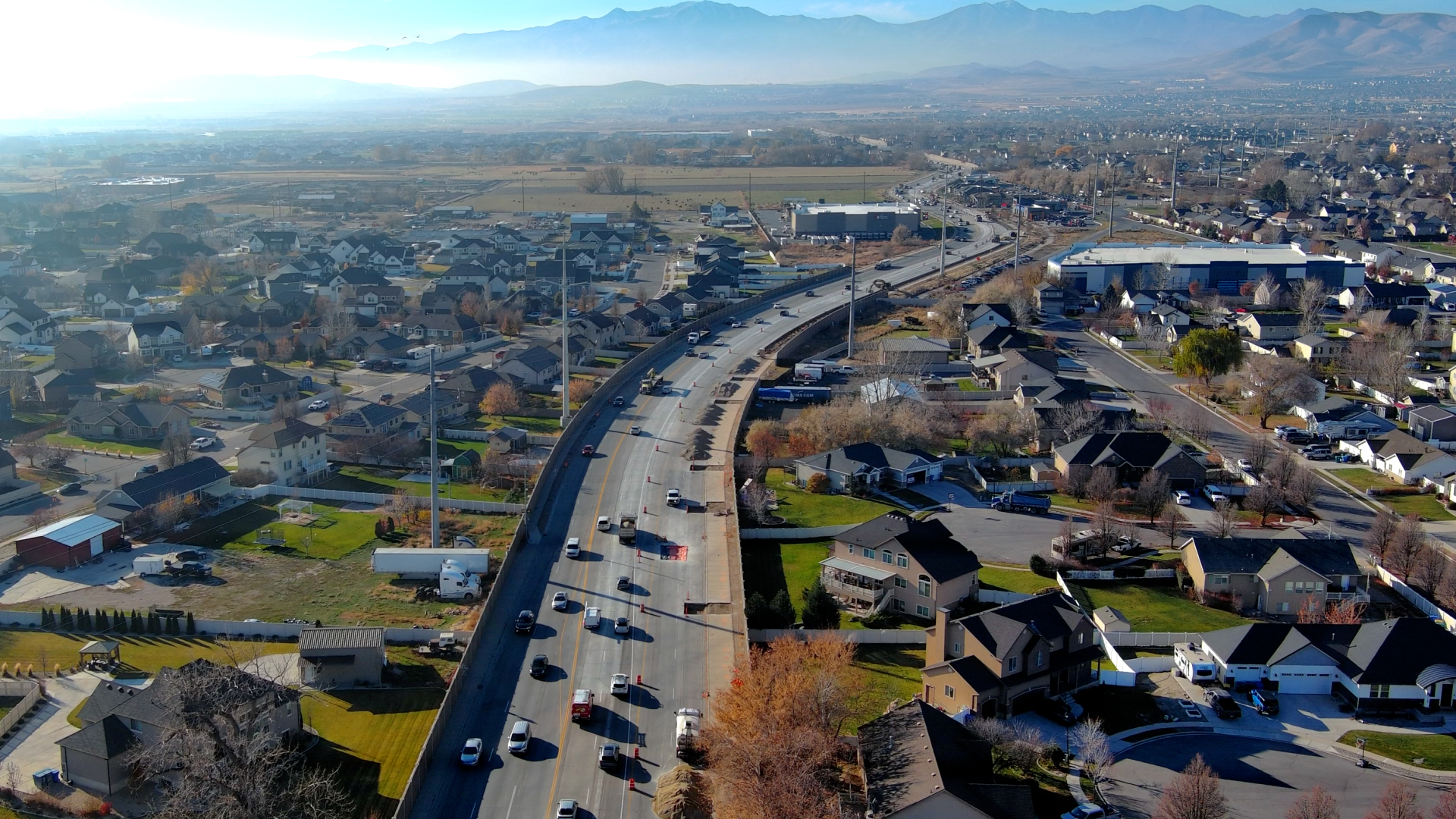
The Utah Department of Transportation (UDOT) says construction on the highly anticipated Flex Lanes system on Pioneer Crossing remains on schedule, even through winter weather, and the work continues to shift traffic patterns for thousands of daily drivers. The project, which spans from I-15 to Redwood Road, aims to improve traffic flow, increase safety, and reduce congestion in one of Utah County’s fastest-growing regions.
According to Wyatt Woolley, Senior Communications Manager at UDOT, crews have made significant progress in the past several months. “The project itself is still on track for completion in late 2026,” Woolley confirmed. With a year of construction ahead, UDOT is emphasizing transparency and consistent communication with residents who rely on Pioneer Crossing as a daily arterial route.
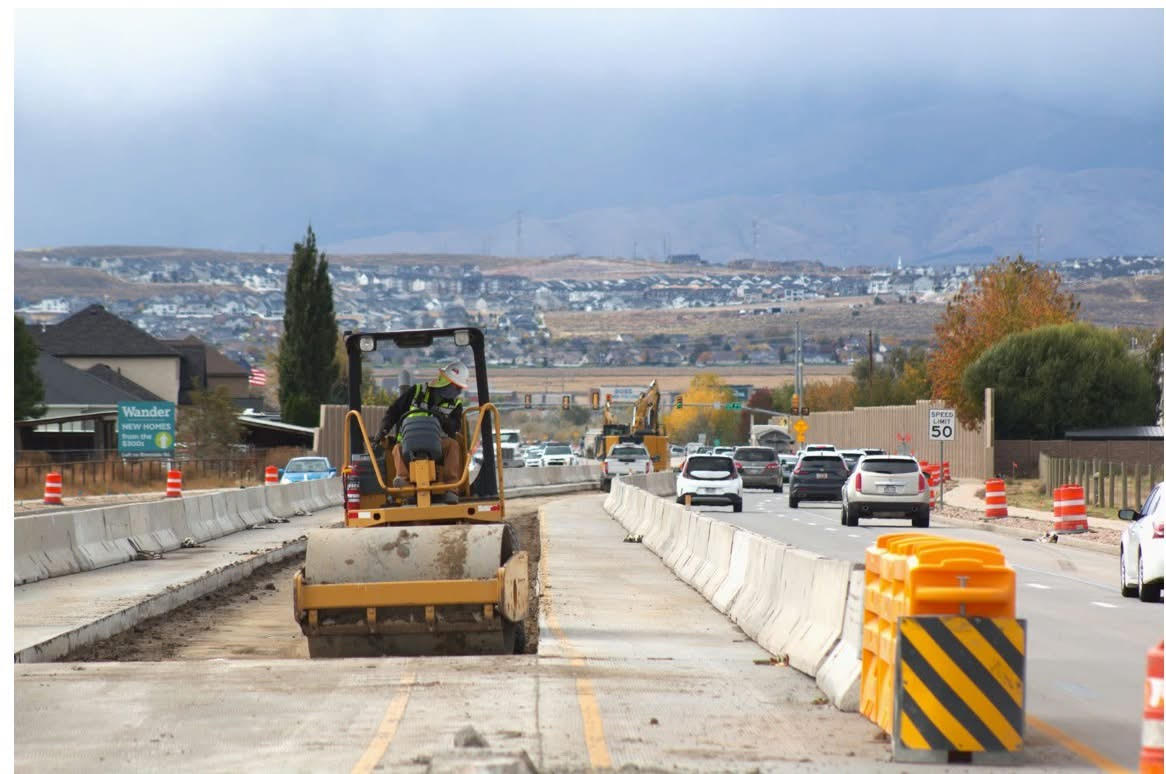
One of the largest accomplishments so far is the near-completion of the center-median removal and reconstruction. For years, the wide median along Pioneer Crossing has served as a safety buffer between opposing lanes. Still, UDOT’s new design transforms it into a functional travel lane that can shift direction during peak hours.
Woolley explained that over 90% of the median work is finished. Crews have removed and rebuilt nearly 4.5 miles of the corridor, pouring more than 7,200 cubic yards of new concrete, an amount Woolley compared to “as many as two million Costco pumpkin pies.”
With the median construction phase wrapping up, drivers may have noticed a recent shift in construction activity. UDOT has moved westbound lanes south between Mill Pond Road and Riverside Drive, making room for the next central stage: significant drainage improvements.
“These upgrades include installing more than 200 new storm drain inlets and miles of buried pipe to move water off the road faster during rainstorms and snowmelt,” Woolley said. The enhancements aim to reduce standing water, improve tire traction, and ultimately increase driver safety, especially during the winter months when icy conditions can develop quickly.
Poor drainage has long been a concern along sections of Pioneer Crossing, with drivers frequently encountering puddling, splash back, and hydroplaning risk during heavy storms. Additionally, crews will begin installing pole foundations and wiring for the future Flex Lane overhead signs. These signs will eventually communicate lane direction during peak travel times.
To create space for storm drain installation and electrical work, UDOT has fully closed the north sidewalk along Pioneer Crossing for the time being. Pedestrians and cyclists are being detoured to alternative routes, though UDOT acknowledges the closure impacts foot traffic between residential neighborhoods and nearby commercial areas.
“Once this work is completed on the north side of Pioneer Crossing, crews will shift traffic to the north and perform similar work on the south side into summer 2026,” Woolley said. This extended timeline means residents should expect recurring lane changes, closures, and narrowed travel lanes as construction alternates between sides over the next 18 months.
UDOT advises drivers to pay close attention as striping, traffic barrels, and signage may shift frequently. Because the entire project area continues to function as a high-volume commute corridor, crews are working to maintain as many open travel lanes as possible throughout construction.
As snow approaches, UDOT has begun coordinating between its construction crews and snowplow operators to maintain accessibility and visibility in the work zone. Winter storms often bring reduced visibility, freezing conditions, and increased crash risk, factors that become even more challenging in active construction zones.
“Our construction crews are working closely with our snowplow crews to prepare for winter weather conditions and keep work zones as clear and visible as possible,” Woolley said.
To improve safety, the speed limit on Pioneer Crossing has been lowered to 40 mph for the duration of construction. UDOT is urging drivers to slow down, stay alert, and avoid distractions while traveling through the corridor. Speeding in work zones remains a top contributing factor in winter-related crashes statewide.
The department also reminds residents that even if workers are not physically present, the lower speed limits still apply. Narrower lanes, abrupt alignment shifts, and hidden equipment behind barriers all contribute to increased risk.
The Flex Lanes system is designed to accommodate shifting traffic demands throughout the day. Once completed, electronic overhead signs will direct drivers into the appropriate lane depending on peak flow, eastbound during the morning commute toward I-15 and westbound during the evening rush.
The goal is to increase road capacity without widening the entire corridor, minimizing the impact on nearby homes and businesses while improving overall traffic flow. With rapid population growth in Lehi, Saratoga Springs, Eagle Mountain, and the surrounding communities, Pioneer Crossing has become one of the most heavily traveled roads in the region.
UDOT estimates that Flex Lanes can increase peak direction capacity by up to 30% when fully operational.
Given the scale and duration of the project, Woolley encourages residents to stay connected with UDOT’s outreach updates. “We have a variety of outreach channels to provide the public with information about Pioneer Crossing and the other major UDOT projects happening in the area,” he said.
Drivers may track weekly construction updates, detour information, and schedule changes at
udotinput.utah.gov/NWUtahCounty.