Politics & Government
Learn about newly elected Lehi City Councilmember Rachel Freeman

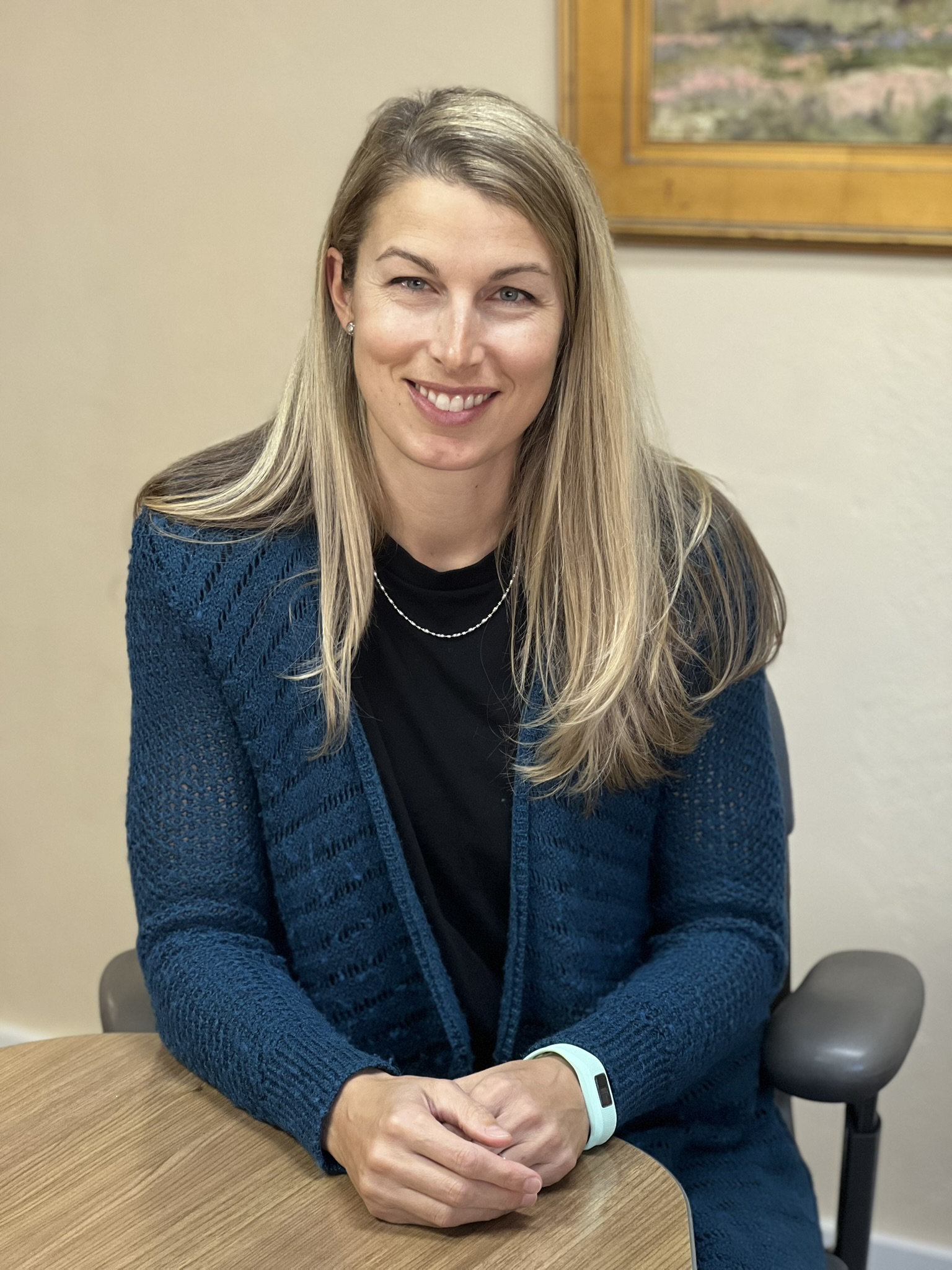
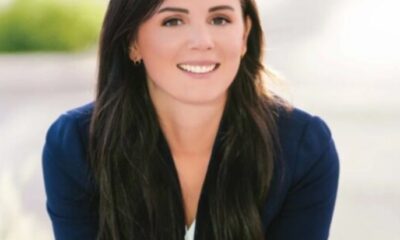
This week, Lehi Free Press publisher Sally Francom visited with Rachel Freeman, who was recently elected to Lehi’s five-member City Council. We learned about her family, educational background, and views on her role in the council.
Sally Francom (LFP):
Rachel, tell us a little bit about your upbringing, where you grew up and your family.
Freeman: I grew up in the Cottonwood Heights area, in Salt Lake. My dad is from Switzerland. He came here as a foreign exchange student. My mom was born and raised in Utah, like me. My parents brought the two cultures together. Her [mother’s] parents were Mission Leaders in Switzerland, and mom went and visited them after she graduated from college. She met my dad there, and he spoke English well, so they dated and got married in Switzerland, then came to Utah. Dad went to BYU law school.
LFP: Did your dad like it here in Utah?
Freeman: Yes, my parents are great. It’s funny, my parents would argue in Swiss German. My mom learned German in high school. And then when she went to Switzerland, she learned Swiss German.
LFP: So, where were you born?

Freeman: I was born in Provo when my parents were at BYU. Dad had his green card. He eventually became a citizen, and my grandpa suggested they stay here [in Utah]. We did live in Switzerland for a few months when I was young, and we also lived in England for about 1.5 years. But I started kindergarten in Utah.
My dad got a JD MBA. He works as an attorney right now. And he started a multi-language translation firm here in Utah County.
LFP: Are both parents still living?
Freeman: Yes, they have a home in Lehi, and they have a home in Liberty, Utah, that reminds them of Switzerland.
LFP: Does your family ski?
Freeman: Yes, my dad loved to ski, and he taught us how. It was 20 minutes up the canyon to the ski resort and back. I learned when I was three.
LFP: Do all your siblings ski?
Freeman: Yes, we all learned how to ski. We’re all adults, and we’ve all continued. I’ve continued to ski, and I’ve taught my kids how to ski, too.
LFP: How many children do you have?
Freeman: We have five.
LFP: What are their ages?
Freeman: I have a first grader through college, up through 19. So, six through 19.
LFP: And where is the 19-year-old?
Freeman: She’s in Hawaii. She goes to the University of Hawaii in Hilo. And she’s taller than I am. She’s 6’3 “, so she plays volleyball there. So, I mean, she’s playing volleyball in Hawaii–can’t get much better than that.
LFP: Yes, that sounds fun. Where did you meet your husband?
Freeman: I met him at BYU. The classic story — we were in the same ward and the same family home evening group.
LFP: Have you two always lived in Utah?
Freeman: No, we both graduated from BYU, and then we went to Ohio State. We were both “Buckeyes.” I went to nursing school there, and my husband went to medical school, and it worked out really well for us.
LFP: So, he’s an MD?
Freeman: Yes.
LFP: What is his specialty?
Freeman: He studied anesthesiology and pain management and started a private practice called Southwest Spine and Pain in 2016. He was trained at the Mayo Clinic when we lived in Minnesota. He brought another doctor from Mayo here; now there are three physicians in that practice.
LFP: Are you currently employed?
Freeman: I’m a nurse practitioner and work at a volunteer care clinic. I do it for free. It is in South Provo. Our clinics are on Tuesday and Thursday evenings and are free for all Utah County residents without insurance who are at or below about 200 percent of the poverty level.
LFP: Who funds it?
Freeman: It’s called Mountainlands Health Clinic, and it’s a coalition between the Church of Jesus Christ of Latter-day Saints, IHC, United Way, and there might be a few other partners. It’s in an area where there are a lot of homeless services and low-income, underserved people. I see patients on a first-come, first-served basis. The doors open at five, and there’ll be patients lined up, and we stay until the last patient’s seen.
LFP: Where do you live in Lehi?
Freeman: I live on the east side, by Skyridge High School.
LFP: Your life is busy, with four kids in school and your volunteer work. What inspired you to get involved in city politics?
Freeman: I have always been interested in government and politics. I got my undergraduate degree in history from BYU, and I have always been involved. I was first elected a county delegate at 19. And when we moved to the Midwest, it was exciting to live there because Ohio was a swing state. We had some fascinating elections there.
Here in Lehi, I watched the school split closely. We had a mink farm sale near us, and some high-density housing was proposed for that property. That activated a lot of my neighborhood. That was the first time I became involved in city politics, attended a city council meeting, and spoke.
LFP: Were you opposed to that development?
Freeman: I was opposed to the amount [of housing units proposed]. I believe, 120 units on a few acres. So, yes, I think we brought it down to 60-something with all the neighbors who came out, because it wasn’t zoned for that [many houses]. That was my first introduction to zoning. Since then, I’ve been able to observe and stay active with city things.
And I’ve been a big volunteer in the school system and in the community in general. I saw there was an election, and two city council seats were open. I kind of had whispers for probably a couple of years.
LFP: What do you mean by “whispers”? Like feelings?
Freeman: Yes, feelings. And then I was able to work with a city engineer because kids were having near misses in my neighborhood due to traffic accidents. I got involved and activated this engineer to study it, to get a crosswalk. And I saw, “Oh, this is how the system works.” I became one of those informed people in the neighborhood.
I’ve always voted — it’s really important to me. I learned from my grandpa’s example. He was a state senator. I saw how he was able to speak for people and enact change.
LFP: Has anything else influenced your decision to run?
Freeman: Yes. I took my family on a once-in-a-lifetime trip to Washington, D.C. Last year, I homeschooled a couple of my kids, and we studied the U.S. presidents and the founding fathers. We studied Thomas Jefferson, George Washington and Abraham Lincoln—he’s my favorite. And then we went to D.C, and we were able to see the artifacts and see more about their lives. It did inspire me.
I came back, and I thought, ‘Look at all the good these people did.’ Especially Abraham Lincoln, he was a simple man, had a simple life, and he was able to do so much
I knew there were a couple of [city council] spots open. There were some challenges here. I don’t know whether the average citizen is always listened to, and I felt like I would represent them well.
I didn’t file until Thursday of that week—the deadline was Friday. And I kept thinking, “Is there anyone that I can say really relates to me, that really represents me well?’ There was one other woman, and I thought she did a great job. I also thought there was another candidate with priorities similar to mine, but I just felt I needed to run.
I was praying in the parking lot. I thought, “Do I really do this? So, I did it.” I didn’t have a website, a campaign manager, or anything like that, but it took off from there.
LFP: Did you have support from your family? Were they on board?
Freeman: Yes. My husband is very supportive. I’ve supported him a lot in his career, and he is very supportive of me.
LFP: He’s going to have to be around on Tuesday nights. Some late Tuesday nights.
Freeman: That’s true. Well, luckily, our kids are older now. You know, we have three teenagers. I took everything into consideration, like the stage in my family, my husband’s career, my career–all of the things.
LFP: Well, good for you. Those are good reasons to run.
LFP: By the way, how does a history major become a nurse practitioner?
Freeman: Well, I am really interested in a lot of things. I was majoring in exercise science at the time. History and exercise science are totally different things.
LFP: Were you an athlete?
Freeman: Yes, I played basketball in high school. So, not college, but I am just fascinated by the human body, the human soul, the mind, and the decisions we make in our lives. I was leaning towards a master’s in history, but I also knew I really wanted to help people and was fascinated by the sciences and the human body. My goal was actually to go to physician assistant school. But when my husband and I were trying to align our graduate school plans, it wasn’t working out. And we came down to deciding between California and Ohio. That was where we could match the best. Then, I found a great accelerated RN-to-MSN graduate program at Ohio State. So, it just fell into place. I couldn’t have predicted it.
LFP: So, you’ve lived in Lehi now for what, like nine years? Almost ten?
Freeman: Yes, nine and a half.
LFP: Where were you living before you moved back to Utah?
Freeman: Illinois. I went to St. Anthony College of Nursing. And that’s where I finished up my master’s degree as a nurse practitioner. We were there for three years. And then, because of job opportunities and family situation, we decided to move here in 2016.
LFP: Your background is interesting because you’ve been influenced by a lot of different things, like education, family and where you have lived. Now, you’ll be part of a lawmaking body for the city. What are three items you would focus on?
Freeman: I feel like communication is huge. I think that better communication will help people feel more informed.
LFP: Specifically, what do you mean, though?
Freeman: I think we should have more weekly communication with important items, like events, but also, we need to have items on the planning commission or city council agendas and where people can find links to where they can watch or comment, and have that information consolidated—a weekly update.
Also, where’s the construction happening? Where is the next road closure? Because sometimes you’re surprised. You live around the block, and all of a sudden, the road’s closed.
If we’re informed, we understand what’s coming and why it’s happening. And better communication could help the average person.
LFP: Are there any other aspects of communication besides more frequent communication or more detailed communication that you’d like to see?
Freeman: Just giving people an opportunity to provide feedback. That will be my job: to be the go-between, or representative of the people, and the city administration and city staff, who are the experts in their areas. And so, if I can understand what people want, what is important to them, and what best serves the community, that will help me do my job better and help us throughout the community. So, if we have better two-way communication between the city council members and the community, it would help us all.
LFP: But I do think there’s a general naivete in terms of all the factors at play with city decision-making.
Freeman: What I have discovered is that a lot of the decisions that we criticize were made before we even were here, right? And we blame the current officials or current staff. And we don’t realize these were decisions made before they moved here or were elected or whatever. And maybe decisions were not even made by Lehi people. Maybe it was by the state. Maybe it was by other stakeholders.
LFP: There’s truth in that.
Freeman: Yes, and hindsight’s always 2020, right? I’m not blind to the fact that there are challenges and things I don’t know. And that’s okay. If we have someone willing to work hard, find out, and communicate, we can go to a lot of good places.
LFP: Are there any other specific problematic areas where you’d like to see growth or change?
Freeman: Growth is actually a struggle right now in Lehi. We’re really sandwiched between I-15 running through us, and we’re sandwiched between multiple cities that have to travel between us to get where they need to go. And so, it’s not only growth in Lehi, it’s growth outside of Lehi that can influence and cause challenges for us. So, a big one is traffic. Almost everyone I talk to, that’s a big challenge for them. And there’s a reason that I try to avoid certain hours on the road. That’s a huge issue. And we’re working on it, and we can continue to do so. And we’re going to have to really partner with neighboring cities, UDOT, MAG, and all the other partners at stake. It’s problematic, complicated, and will never move fast enough.
One of my main points and priorities was balanced growth, which translates into making sure that we have our infrastructure in place first and that we’re having some good commercial in and hopefully grows so we can have some sales tax revenue.
And I believe that Saratoga was able to lower its property tax recently because it has a high commercial sales tax base. So that’s fascinating to me. We don’t have to reinvent the wheel here in Lehi. We can look at other cities and take what’s great about them and what’s working for them and employ it here.
LFP: I’m curious what you felt about the district split. What was your take on that, since you said you were interested?
Freeman: I was watching it really closely, and at first it seemed like the best thing for Lehi was to go with the West from all that I was reading and studying, and I was basing that on the current school board’s opinions, and I was watching the MGT study. And then when the analysis came down, it was best for us to go with Highland and Alpine. I got on board, especially since even our weather patterns here differ from those in other parts of the district.
LFP: Lehi voters clearly wanted fresh sets of eyes in the city council with you and James, and then with Paul as mayor. Why do you think that is–the fact that three people who haven’t had municipal government experience were elected?
Freeman: Well, this isn’t just Lehi-specific; we have seen it statewide. There’s been some backlash against current government, current city council members. There’s also been exponential growth here in Utah in the last four years. And those two things go hand in hand, and a lot of people are blaming the current city leaders for city planning, traffic, growth, and all of that.
I want to believe that people felt like they could relate to me and that I could help represent them and be a voice for them, and that’s what they were looking for.
I know that there’s a learning curve. I’m a learner, a lifelong learner, and I’m not afraid of hard work. I know how to advocate for people, and I have compassion. I can absorb and read large amounts of information. All of those skills will help me in this job, and I’m excited about the future.